
Adults Experiencing Homelessness
Project Results - Research Findings
Quantitative Findings of the GET-UP Study
We are pleased to present the preliminary quantitative findings of the GET-UP Study. This report presents the empirical findings from the quantitative phase of the study, examining the psychosocial and behavioral factors associated with participation in physical activity among adults experiencing homelessness or severe housing instability. The findings contribute to a growing body of evidence supporting the use of sport as a vehicle for health promotion, empowerment, and social inclusion among socially vulnerable populations.
Project Background
Homelessness represents one of the most severe forms of social exclusion and is associated with disproportionately high rates of chronic physical illness, mental health problems, substance use, social isolation, and reduced quality of life. Individuals experiencing homelessness often prioritize immediate survival needs—including shelter, food, and personal safety—over health-promoting behaviors such as regular physical activity. Recognizing these challenges, the GET-UP Study was designed to investigate how structured sport-based life skills interventions can contribute to improving health, wellbeing, and social reintegration among homeless adults. Specifically, the project aims to promote:• Improved physical health and psychological wellbeing.
• Development of social relationships and supportive networks.
• Enhancement of life skills and personal empowerment.
• Greater social participation and community reintegration.
Theoretical Framework
The study is grounded in two complementary behavioral theories that explain both individual decision-making and environmental influences on physical activity participation.Theory of Planned Behavior (TPB)
The Theory of Planned Behavior proposes that participation in physical activity is primarily determined by behavioral intentions, which are influenced by:• Attitudes toward physical activity.
• Subjective norms (perceived social expectations).
• Perceived behavioral control (confidence in one's ability to participate).
This framework allows the identification of cognitive factors that encourage or discourage engagement in exercise among individuals experiencing homelessness.
COM-B Model of Behavior Change
The COM-B Model conceptualizes behavior as the result of interactions among three essential components:• Capability (physical and psychological capacity).
• Opportunity (social and environmental conditions).
• Motivation (reflective and automatic processes).
The COM-B model is particularly appropriate for vulnerable populations because it considers the structural barriers that often constrain healthy behaviors beyond individual motivation alone.
Study Design & Methodology
The GET-UP Study employed a mixed-methods research design. This report presents the quantitative component of the study, which investigated determinants of physical activity participation among adults experiencing homelessness.Participants
The quantitative sample consisted of 102 adults experiencing homelessness or unstable housing conditions who were recruited through partner social service organizations participating in the project. Participants represented diverse housing situations, including emergency accommodation, transitional housing, temporary housing arrangements, and individuals living on the streets or at immediate risk of homelessness.Measures
Data was collected using a structured questionnaire incorporating demographic information, health indicators, psychosocial measures, and behavioral assessments. Most psychosocial variables were measured using 7-point Likert-type scales. The questionnaire assessed:• Demographic characteristics and housing status.
• Physical and mental health indicators.
• Family and peer social support.
• Previous participation in physical activity.
• Theory of Planned Behavior constructs (attitudes, subjective norms, perceived behavioral control, and behavioral intentions).
• Perceived barriers to physical activity.
• Behavioral determinants based on the COM-B model.
Participant Profile & Demographics
Understanding the demographic background of our participants is crucial for analyzing how social, economic, and structural factors influence physical activity and sport participation among adults experiencing homelessness or housing instability.
Key Findings
- Sample Context: The study included 102 adults experiencing homelessness or severe housing insecurity, recruited from two distinct national contexts:
- Greece: 52 participants from the Open Day Centre for Homeless People (Municipality of Corfu, managed by Equal Society).
- Italy: 50 participants from homelessness support structures operated by Fraternità Cristiana Opera di Padre Marella.
- Age Profile: The average age was 53.99 years (ranging from 20 to 80). This wide range highlights how prolonged housing vulnerability correlates with cumulative physical decline.
- Gender Distribution: 78.4% men and 21.6% women. This distribution mirrors broader European homelessness trends.
- Educational Background: Participants faced significant socioeconomic disadvantages:
- Secondary Education: 40%
- Primary Education: 19%
- Vocational Education: 14%
- No Formal Education: 8%
- Higher Education (Bachelor level): 6%
Strategic Implications
The demographic data reveals a population facing multiple intersecting vulnerabilities (aging, social isolation, and educational disadvantages). These factors emphasize the absolute need for gender-sensitive, safe, and highly accessible sport-based interventions rather than "one-size-fits-all" programs.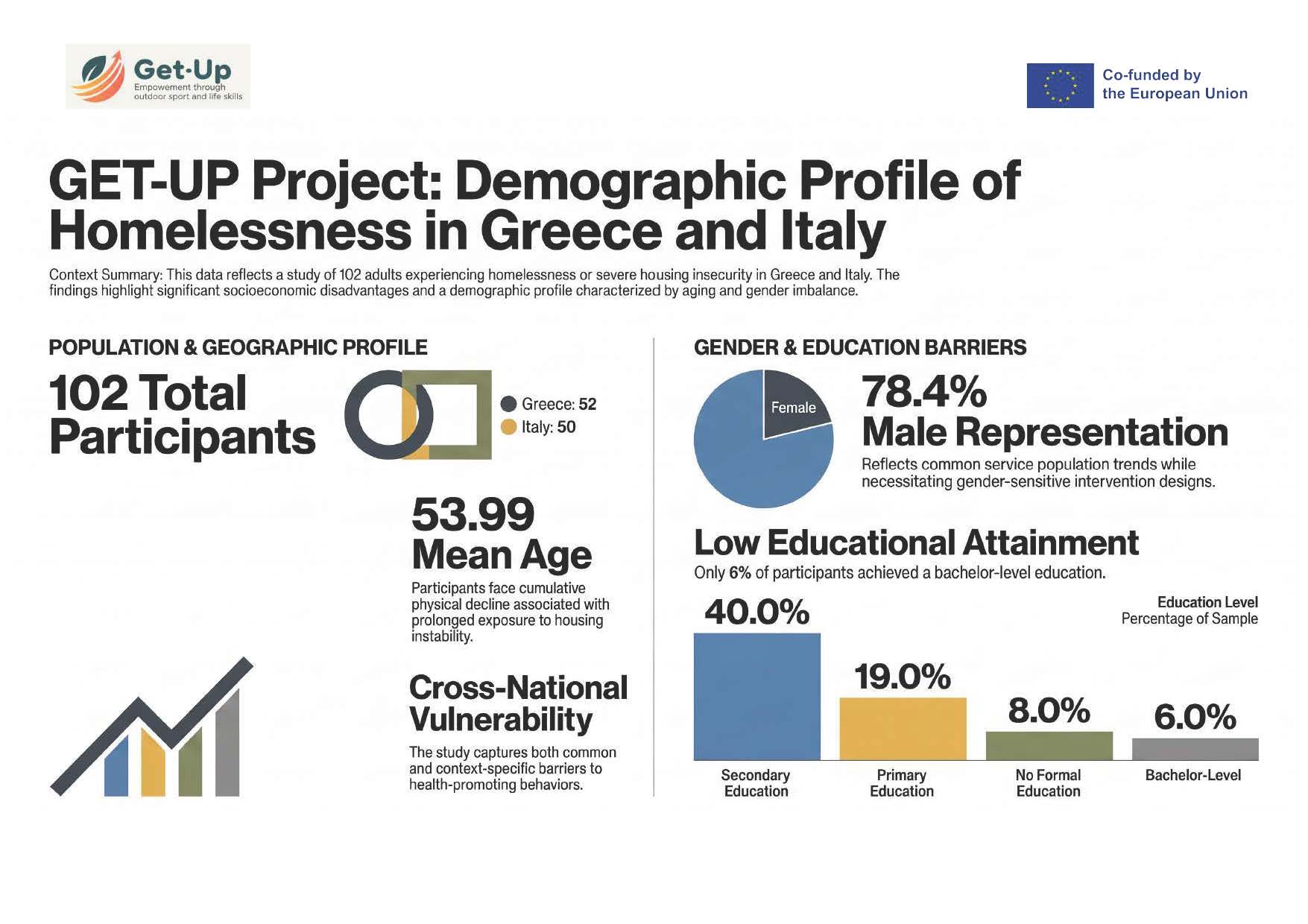
Housing Instability & Physical Activity
Housing insecurity acts as a major structural barrier to sport and physical activity participation. Within the GET-UP Study, housing status was analyzed as a key determinant of social inclusion and behavioral patterns.
Key Findings
- Current Housing Status (A Spectrum of Vulnerability): The vast majority of participants lived in unstable or temporary arrangements:
- Transitional housing: 37.3% (the largest subgroup)
- Temporary accommodation: 18.6%
- Stable housing (ownership): 15.7%
- At risk of homelessness: 12.7%
- Direct street homelessness: 7.8%
- Shelter-based accommodation: 5.9%
- Chronicity (Prolonged Deprivation): For many, homelessness is an entrenched, long-term condition. Of those reporting duration ():
- Less than 6 months: 26.6% ()
- 3–5 years: 21.9% ()
- 1–2 years: 18.8% ()
- More than 5 years: 18.8% ()
- Residential Instability (Constant Relocation): Over the previous year, repeated displacement disrupted daily routines:
- Relocated once: 29.8% ()
- Relocated multiple times: 21.0% ()
Strategic Implications
These findings explain the prominent "intention–behavior gap" in the study. While participants frequently desire to engage in physical activity, environmental instability (disrupted routines, lack of transport, and constant relocation) strips away their practical opportunity. To be effective, sports programs must offer low-threshold access and flexible schedules.programs.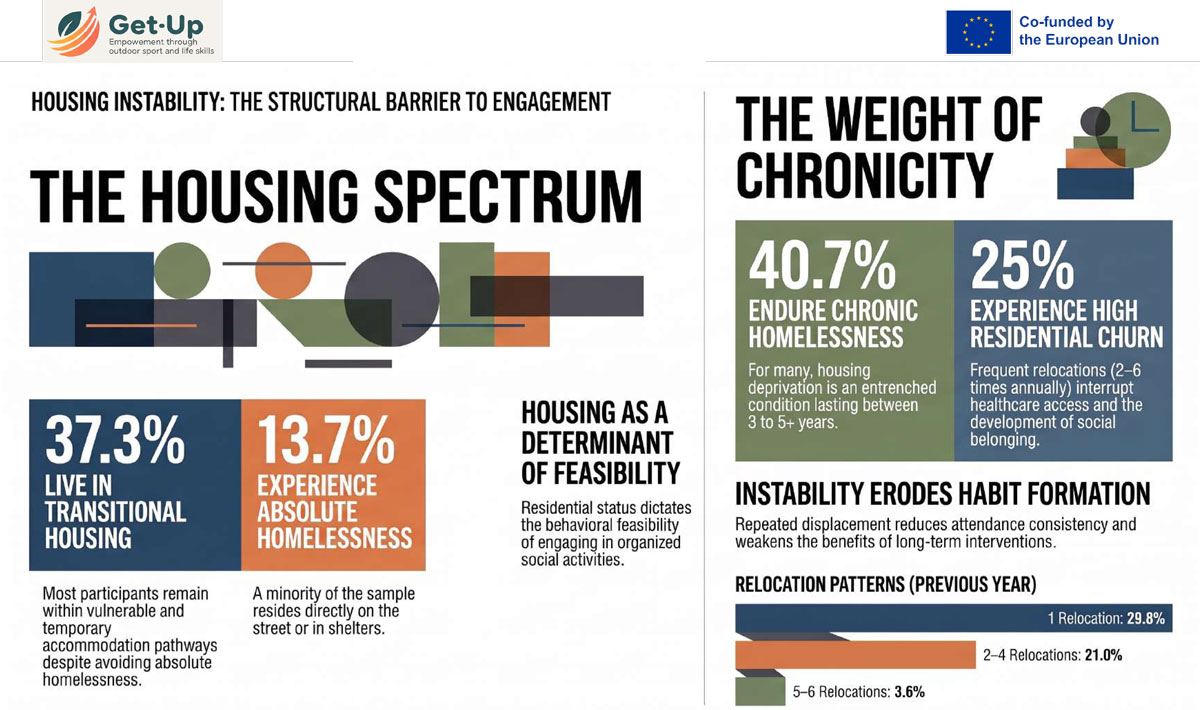
Health Status & Barriers to Physical Activity
The study explored how physical and psychological health vulnerabilities impact baseline readiness for sport-based interventions. The data reveals that low participation in physical activity is rarely a result of poor motivation, but is driven by severe physical and psychological health limitations.Key Findings
- Physical Health Status: Physical health represents a major limiting factor for consistent engagement:
- 54.9% of participants perceive their physical health as suboptimal (33.3% Fair and 21.6% Poor).
- Only 29.4% rated their health as Good, and just 15.7% as Excellent.
- Mental Health Status: Psychological vulnerability serves as a critical barrier to behavioral capability:
- 44.1% of participants described their mental health as suboptimal (29.4% Fair and 14.7% Poor).
- 36.3% reported Good mental health, while 19.6% rated it as Excellent.
- Chronic Health Conditions: The prevalence of long-term illness reinforces cumulative disadvantage:
- 53.9% of the sample reported living with at least one chronic health condition.
- 46.1% reported having no chronic illnesses.
Strategic Implications
Generic exercise promotion is insufficient. Future interventions must prioritize Capability Over Motivation. Programs must address physical limitations by incorporating gradual, low-threshold, and adapted physical activities that account for fatigue, trauma, and chronic illness in a psychologically supportive environment.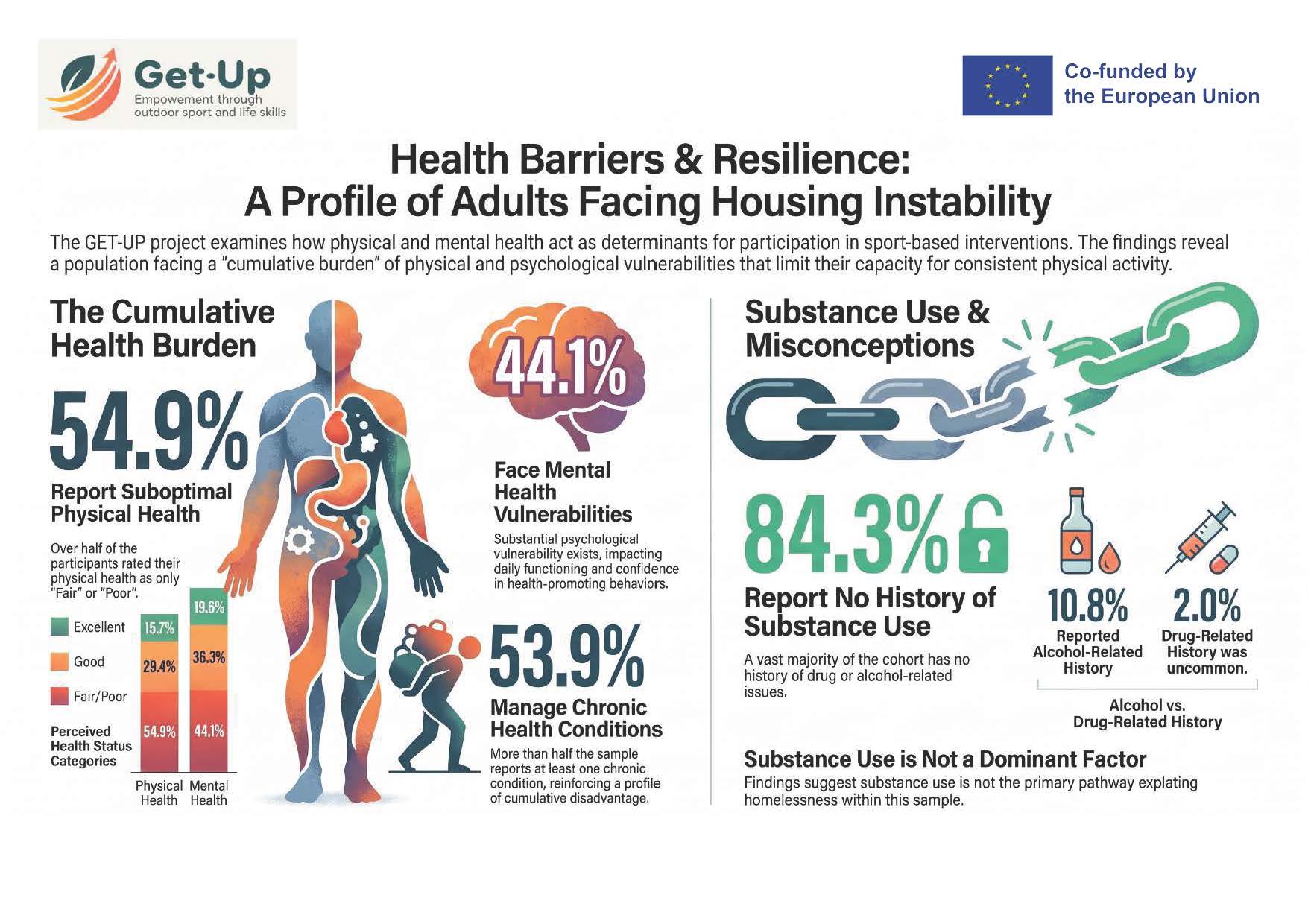
Social Support & Engagement with Formal Services
Understanding the social ecology of adults experiencing housing instability is crucial for designing effective interventions. The findings reveal a stark contrast between weak informal support networks and exceptionally high engagement with formal services.Key Findings
- Informal Support Networks (Severe Fragmentation):
- Family Support: Only 27.5% have active family support, while 47.1% have none, and 25.5% report limited support.
- Peer Support: Only 31.4% report having peer support, whereas 47.1% have none, and 21.6% have limited connections.
- Formal Support Systems (High Engagement):
- NGO & Social Service Contact: 49.0% of participants engage frequently, and 24.5% engage occasionally. Only 6.9% have zero contact.
Strategic Implications
While individual motivation is high, a severe "Social Opportunity" deficit deprives participants of the positive reinforcement and accountability needed to sustain healthy behaviors. Because trusted NGOs act as substitute social safety nets, they serve as the ideal platform for launching sports interventions designed to rebuild social capital and peer connection.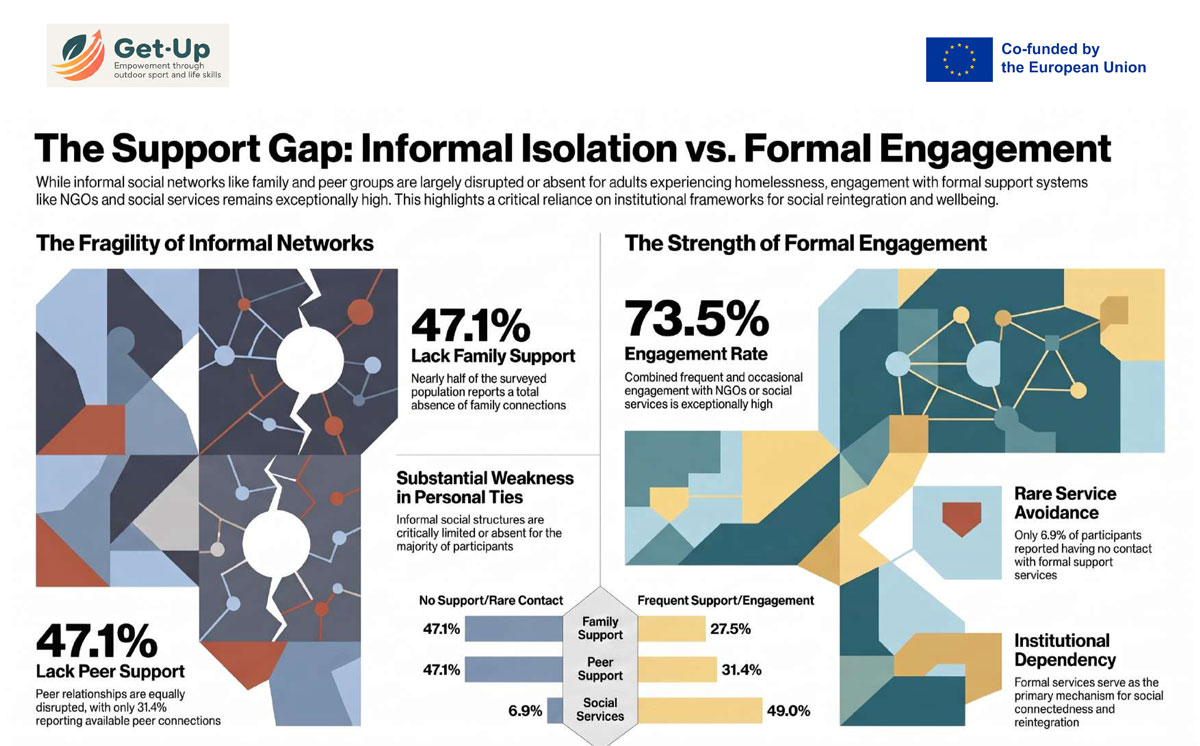
Physical Activity Participation History
Data regarding past physical activity levels confirms a significant gap between intention and behavior: while participants highly value exercise, actual historical participation remains low due to systemic constraints.
Key Findings
- General Exercise Engagement: Out of 102 recorded responses, a substantial subgroup experienced prolonged disengagement from physical activity:
- Rare or non-existent participation: 60.8%
- Regular activity: 39.2%
- Structured Sports History: The gap becomes wider when looking at organized or community-based sports programs, showing highly limited exposure to structured athletic environments:
- No previous involvement: 75.5%
- Previous participation: 24.5%
Strategic Implications
This data reflects severe historical deficits in environmental opportunity rather than a lack of willpower. Future sports programs targeting socially excluded populations must not assume prior athletic experience or baseline fitness. Entry points must be non-intimidating and focused on step-by-step progression.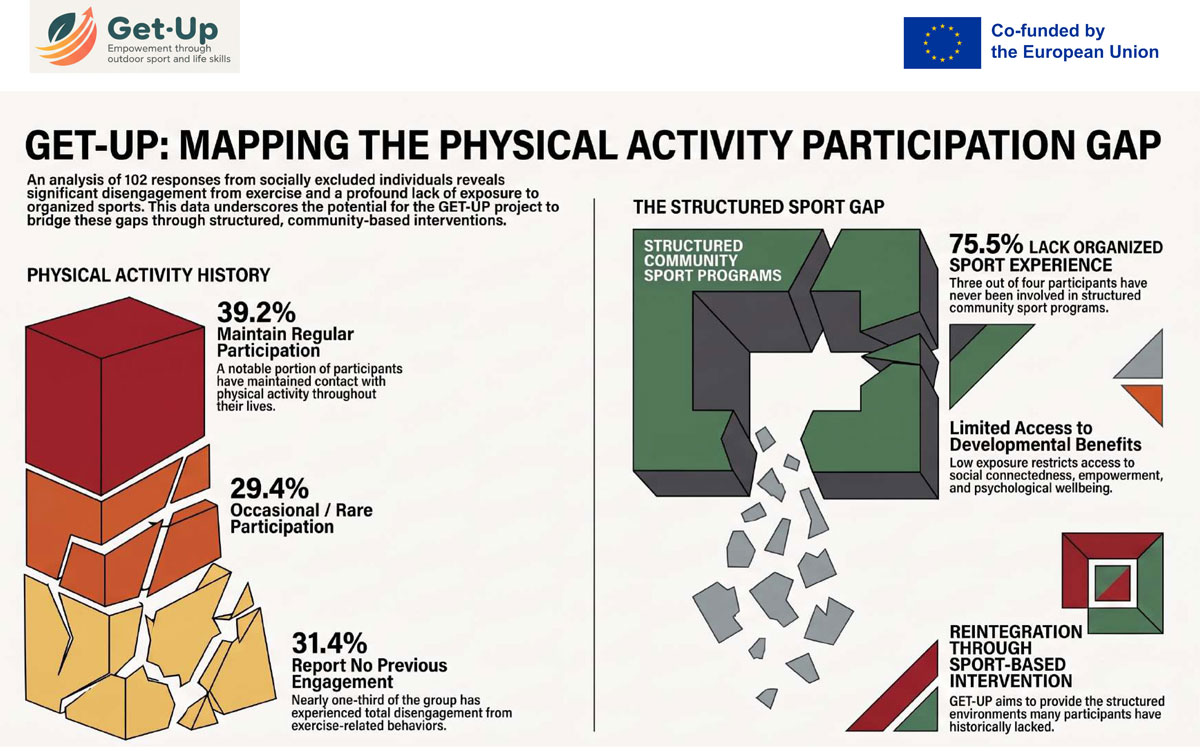
Attitudes Toward Physical Activity
Do adults experiencing homelessness reject physical activity? Data analyzed through the lens of the Theory of Planned Behavior reveals exactly the opposite: marginalized populations hold a consistently positive attitudinal profile toward exercise.
Key Findings
-
Participants demonstrated overwhelmingly positive cognitive and affective evaluations of exercise, ranking scores from 5 to 7 on a 7-point scale:
- 88.9% evaluate exercise as useful.
- 87.9% perceive it as beneficial.
- 86.5% describe it as pleasant.
- 86.4% consider it wise.
- 82.7% view it as important.
- 80.8% evaluate it as good.
- 69.3% view it as relaxing (the lower relative score reflects the reality of chronic survival stress and fatigue).
Strategic Implications
Because health awareness and baseline motivation are already exceptionally high, future programs should shift away from "educating" participants about the benefits of exercise. Instead, energy and funding must be directed entirely toward reducing operational barriers—such as eliminating costs and creating close, psychologically safe locations.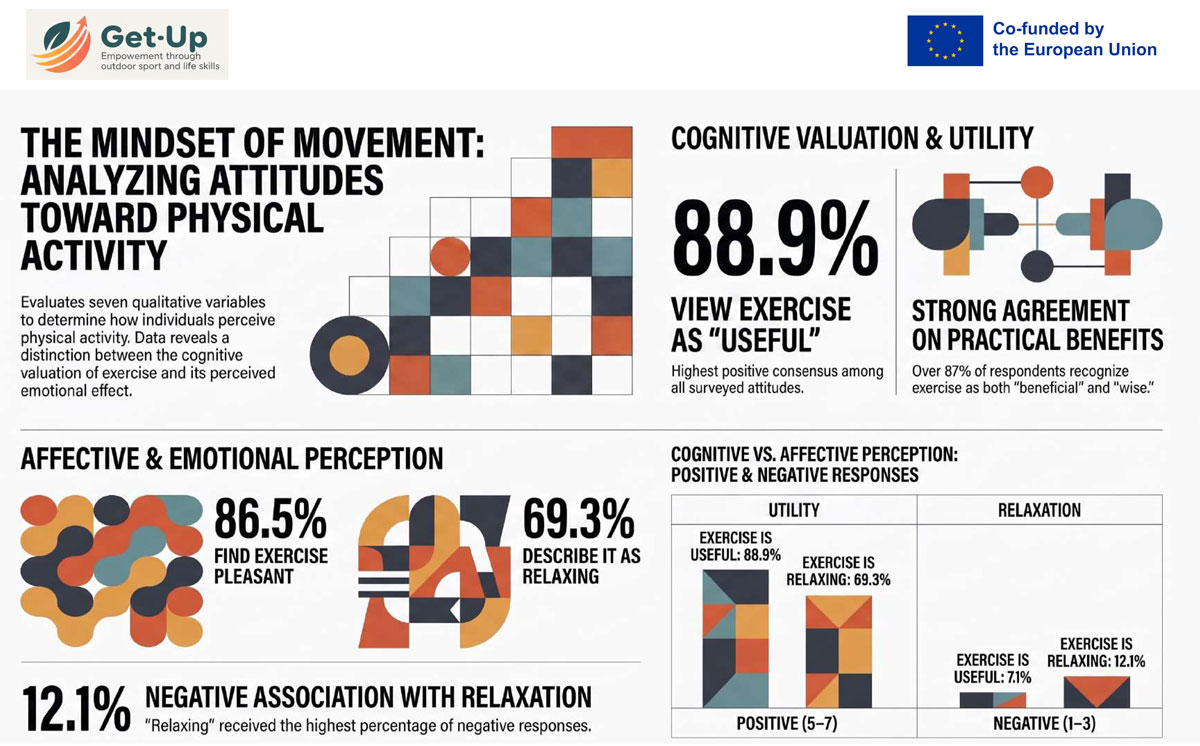
Subjective Norms
This section explores how social expectations and environmental validation influence the behavioral intentions of adults experiencing homelessness. Within the Theory of Planned Behavior, subjective norms measure the perceived social approval or pressure regarding exercise engagement from significant individuals.
Key Findings
Perceived Social Approval: Participants generally perceived moderate-to-strong social validation regarding exercise.
- 63.7% agreed that important people in their lives believe they should exercise.
- 61.8% indicated that significant others actively wanted them to engage in physical activity.
The Motivation Disconnect: While social approval was high, translating these external expectations into personal drive was substantially weaker. Only 48.0% reported feeling motivated by others' expectations, while over half () remained neutral or disagreed.
Strategic Implications
These findings indicate that physical activity is not socially rejected within the participants’ immediate interpersonal environments. However, there is a clear distinction between passive social approval and internalized normative motivation. Because external expectations do not consistently convert into behavioral drivers, interventions should focus on building peer-supported, community-driven sports environments where social support is active and shared rather than abstract.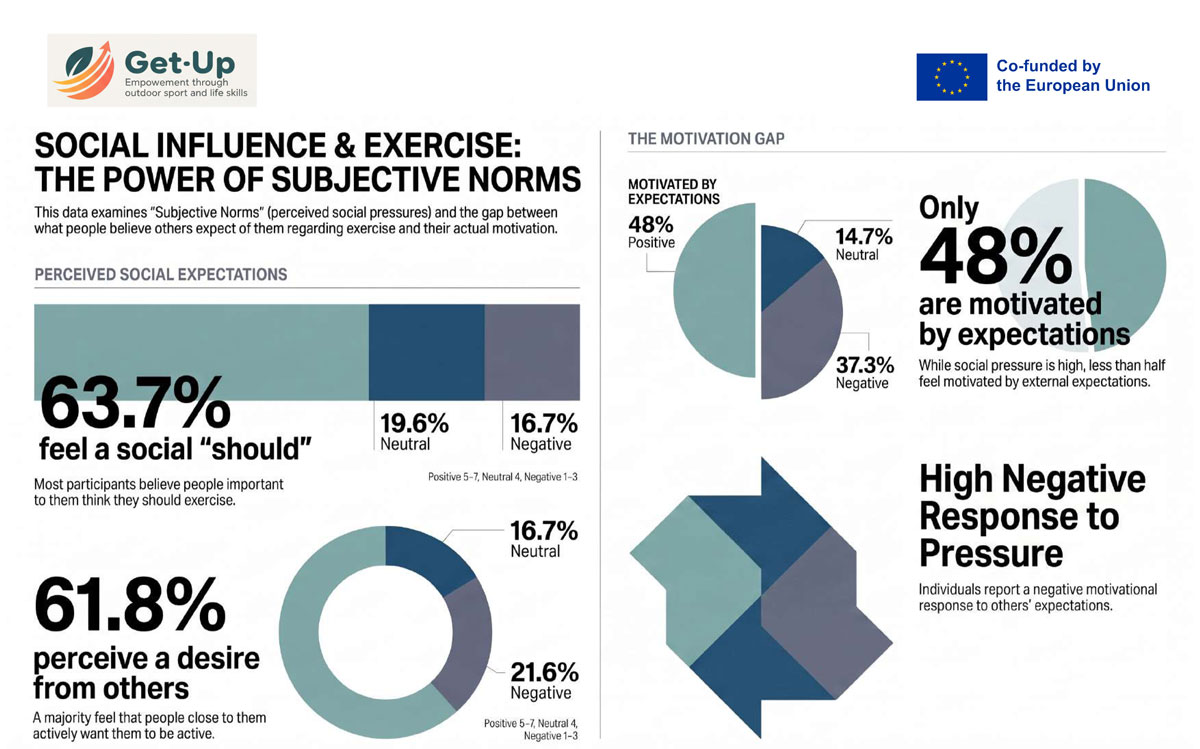
Perceived Behavioral Control
Perceived Behavioral Control (PBC) emerged as a pivotal determinant of physical activity readiness. Reflecting the core objective of the GET-UP project—to identify structural and psychosocial mechanisms that facilitate or hinder sport participation—this construct highlights a critical discrepancy between perceived personal autonomy and practical capability under conditions of socioeconomic deprivation.
Key Findings
- High Perceived Autonomy: A large majority of participants assume personal responsibility for their health behaviors and report a strong sense of control:
- 80.7% agreed they could participate in physical activity if they wanted to.
- 84.1% believed that participation depended entirely on themselves.
- 76.5% reported an overall sense of personal control over engaging in physical activity.
- Low Practical Capability: This high sense of autonomy was not matched by practical confidence. Only 62.7% believed they were genuinely capable of participating successfully, and only 52.0% believed they would not encounter major structural difficulties. Conversely, 29.4% explicitly anticipated substantial barriers.
Strategic Implications
The data proves that participants do not attribute inactivity solely to a lack of willpower or external forces; they accept personal responsibility. However, the presence of real-world structural barriers limits their practical capability. To close this gap, interventions must focus on removing concrete obstacles (such as financial costs, scheduling conflicts, and lack of secure facility access) to safely match participants' high sense of autonomy with the practical capability to act.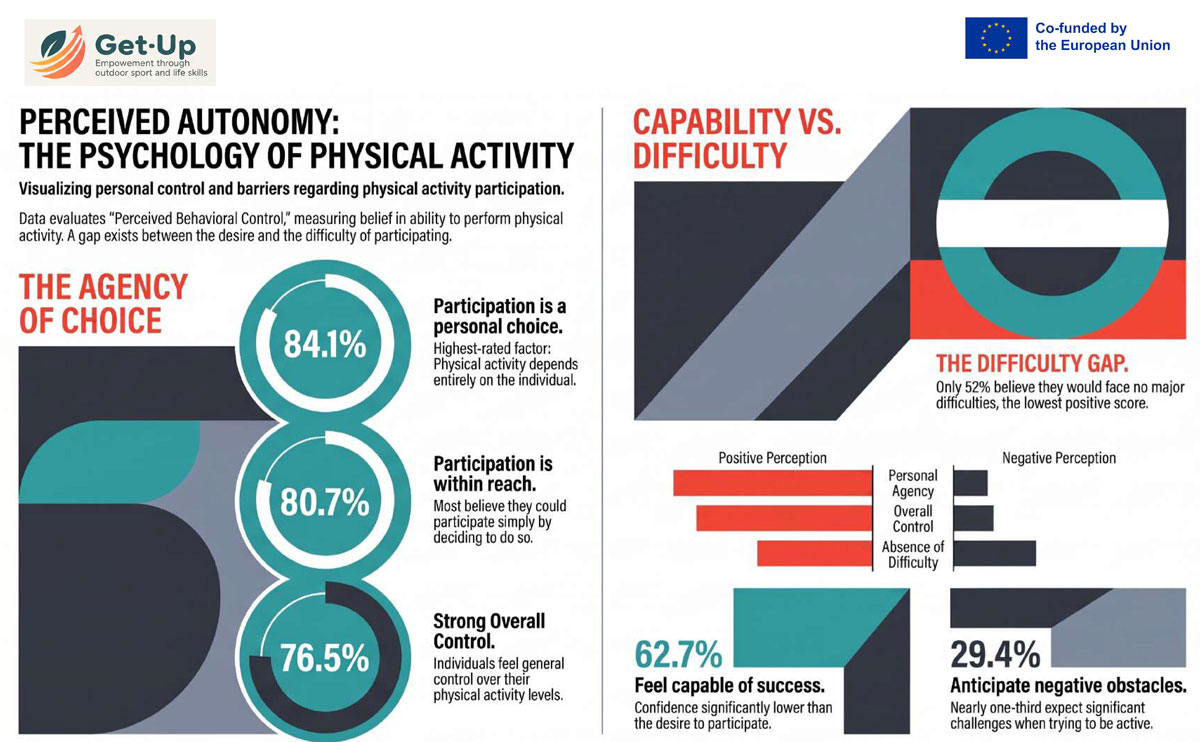
Behavioral Intentions Toward Participation
Behavioral intention represents the immediate antecedent of actual behavior within the Theory of Planned Behavior. This section evaluates the definitive baseline readiness of adults experiencing housing instability to actively join the structured sport- and physical activity-based interventions developed by the GET-UP project.
Key Findings
Despite highly favorable general attitudes toward exercise and moderately supportive social norms, these positive psychological dispositions did not consistently translate into firm intentions to participate:
-
- Clear Intention Gap: Only 34.6% of participants expressed a clear intention to participate in future physical activity programmes, whereas 45.5% reported little to no intention, and 19.8% remained undecided.
- Limited Commitment: Only 37.3% indicated they would actively try to participate, while 45.1% expressed low commitment.
- Program Effort: While 38.2% reported that they would make a serious effort to attend organized activities, a larger proportion (44.1%) reported limited willingness or ability to invest such an effort.
Strategic Implications
The high neutral and negative response rates underscore that positive health beliefs alone cannot generate behavioral commitment when individuals face extreme life precarity. To turn passive willingness into active participation, the GET-UP project recommends that interventions reduce the psychological "effort" required. Programs must feature direct outreach, low-threshold enrollment, immediate integration with existing social services, and highly predictable routines to buffer against the exhausting realities of homelessness.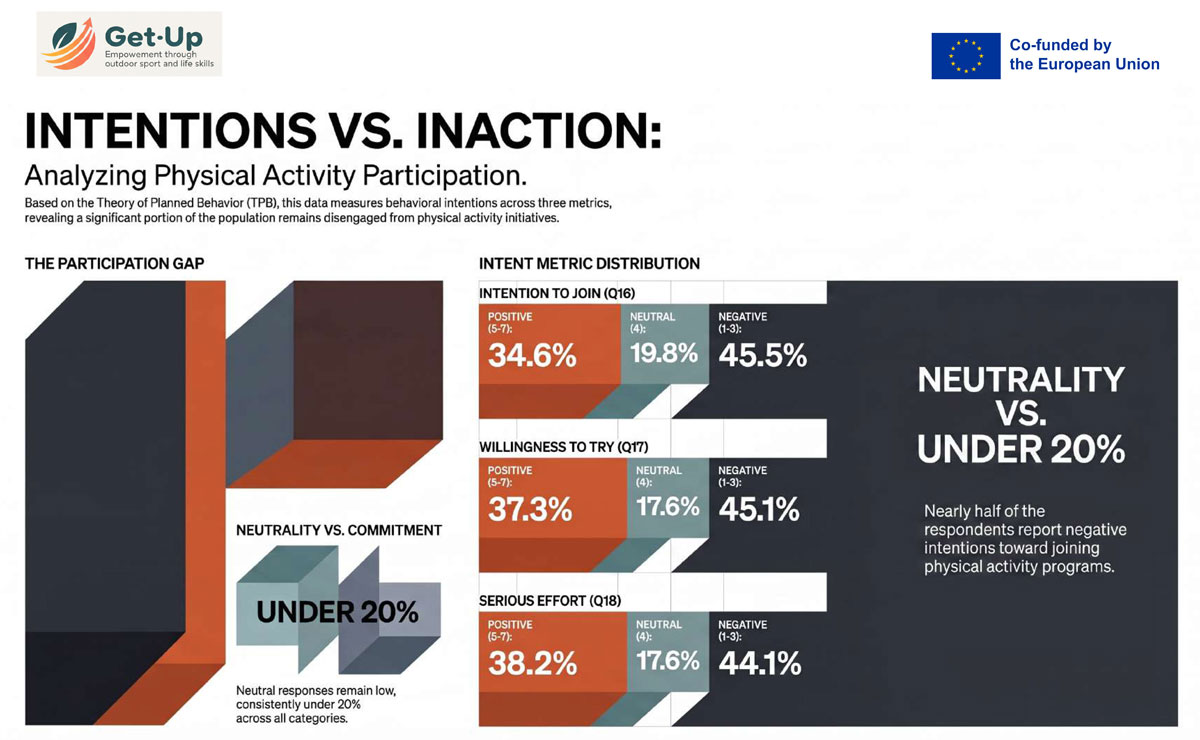
Breaking Barriers: What Truly Limits Physical Activity?
A common misconception is that low physical activity among vulnerable populations stems from apathy. This section deconstructs this myth, isolating the precise structural, financial, and psychosocial obstacles standing in their way.
Key Findings
- Social Identity & Belonging (50.7% Agree): The single strongest barrier identified was psychological stigma. Over half agreed with the statement: "I do not belong among people who exercise."
- Financial & Logistical Exclusion:
- 45.5% agreed that exercise requires expenses they simply cannot afford.
- 42.0% reported that exercise locations are too far away and transportation costs are prohibitive.
- Institutional Conflict & Survival Fatigue:
- 42.4% noted that rigid exercise schedules conflict with essential caseworker appointments or meal distributions.
- 40.8% stated that the compounding exhaustion of daily survival leaves them with too little energy.
- Factors That Are NOT Major Barriers:
- Survival Priorities (25.7% Agree): Most rejected the idea that exercise takes away critical time from finding food or shelter.
- Clothing Stigma (19.6% Agree): Feeling ashamed in sports attire was the least influential barrier.
- Social Networks (11.8% Agree): Very few felt physical activity would isolate them from friends.
Strategic Implications
Interventions must offer free access, provide necessary basic equipment, and be hosted within walking distance of key shelter services. Furthermore, schedules must remain flexible to avoid forcing participants to choose between health interventions and basic survival services.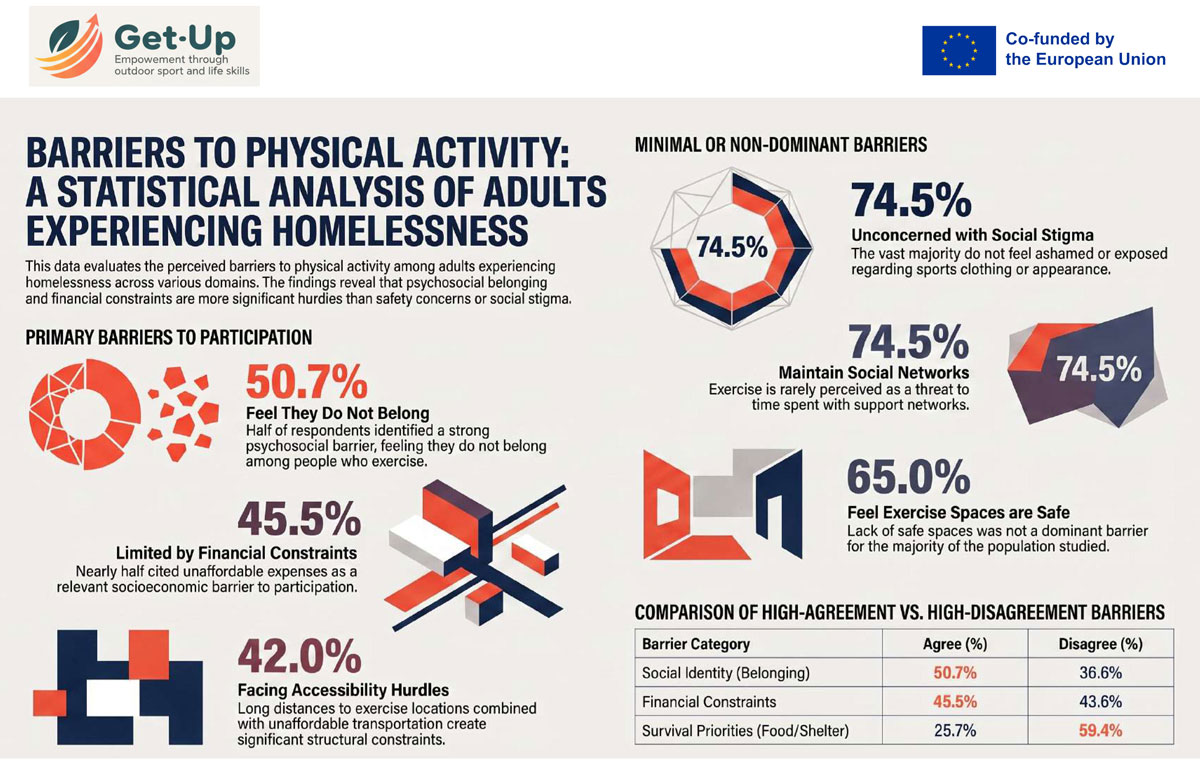
COM-B Diagnostic Assessment: Capability
The evaluation of the Capability domain within the COM-B model reveals a striking contrast: participants possess significantly stronger psychological readiness for regular physical activity than physical capacity.
Key Findings
- High Psychological Readiness: Participants show a strong mental foundation and understanding:
- 90.1% understand the vital importance of physical activity.
- 77.2% know exactly how to exercise properly.
- 66.0% – 68.0% report having the necessary mental resilience to overcome psychological barriers.
- Lower Physical Capability: In contrast, physical self-efficacy drops significantly, with only about half of the participants feeling physically capable:
- 55.4% report having adequate physical strength.
- 52.5% possess the endurance to overcome physical limitations.
- 50.5% believe they possess sufficient physical skills.
Strategic Implications
Inactivity is driven by the cumulative effects of chronic illness, poor nutrition, and prolonged stress rather than a lack of knowledge. Programs must design low-impact, adaptive physical activities that meet participants at their current physical capability level to prevent early burnout or injury.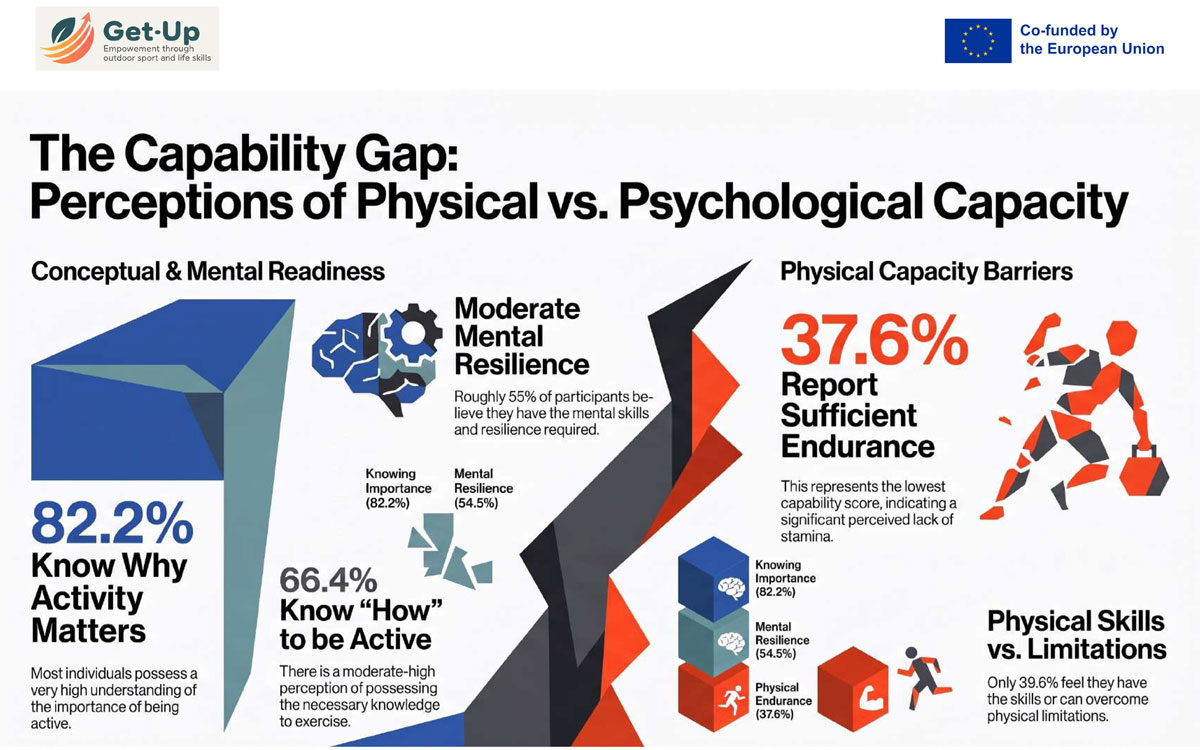
COM-B Diagnostic Assessment: Opportunity
Applying the COM-B framework demonstrates that the primary bottleneck to physical activity is Opportunity—specifically driven by systemic environmental deprivation and social isolation.
Key Findings
- Time Availability: 67.3% of participants report having sufficient time in their day to exercise.
- Material & Financial Constraints:
- 70.3% completely lack access to basic exercise equipment.
- 64.6% face inadequate financial resources to access sports facilities.
- Social & Behavioral Isolation:
- 66.3% lack exercise companions or partners.
- 56.0% report a lack of reminders, cues, or triggers to exercise.
- 50.0% lack general social support from an active network.
- Environment & Safety: Only 55.1% feel they have consistent access to physically safe places to exercise.
Strategic Implications
Because participants have the time but lack the means, promotional messaging is useless without structural support. Interventions must directly supply social infrastructure (peer-based groups, mentoring) and safe physical spaces to successfully bridge the opportunity gap.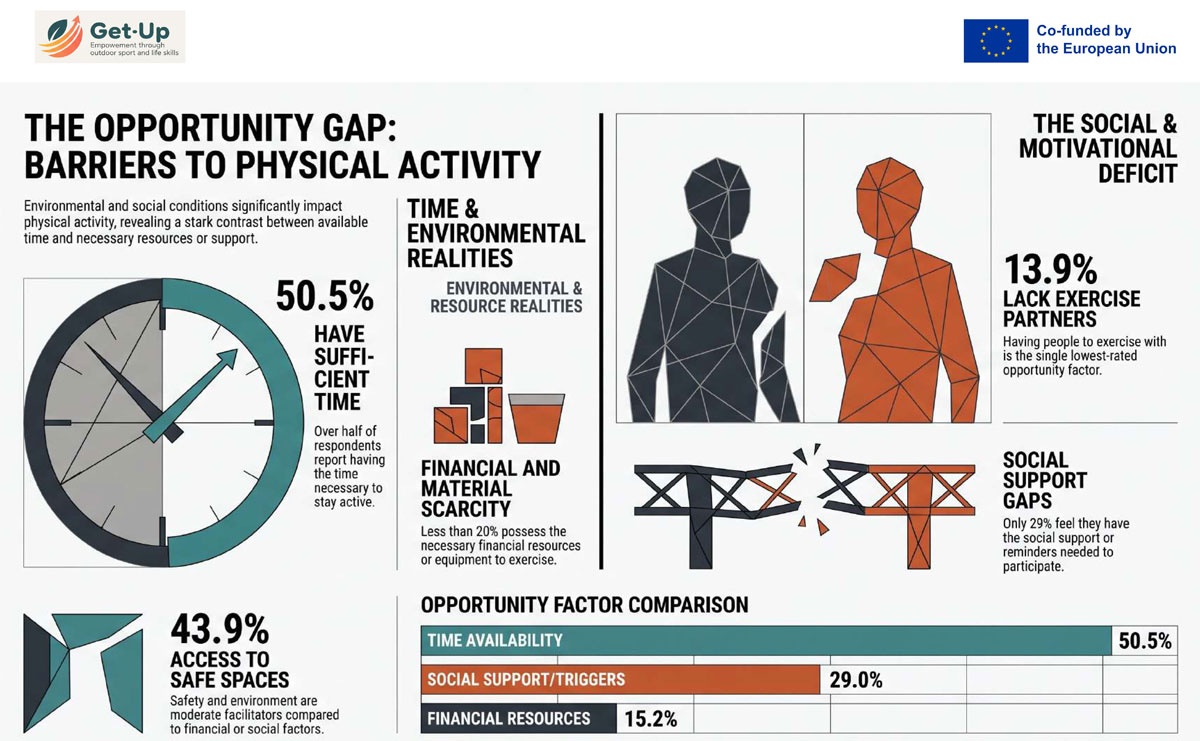
COM-B Diagnostic Assessment: Motivation
The final domain of our COM-B evaluation highlights a clear trend: while the initial desire to stay active is incredibly high, turning that reflective motivation into an automated daily routine remains a significant challenge.
Key Findings
- Strong Reflective Motivation: Participants strongly understand and value the concept of physical wellbeing:
- 88.1% agree that physical activity directly benefits their long-term health.
- 81.2% view regular activity as an absolute personal necessity.
- 66.3% express a strong personal desire to be active.
- The Maintenance Gap: Motivation drops sharply when it comes to long-term behavioral maintenance, habit execution, and planning:
- Only 56.4% are actively planning regular participation in an activity.
- Fewer than half (45.5%) are successfully developing a consistent habit.
Strategic Implications
There is a sharp divide between reflective motivation (intending to exercise) and automatic motivation (doing it seamlessly). Unstable living conditions and disrupted daily routines frequently block habit formation. Interventions should focus heavily on providing structured reminders, milestone tracking, and routine-building support within social care structures to help participants transition from intention to habit.